Saturday, February 6, 2010

The wolf in sheep's clothing campaign ad


Heard about this on KPCC-FM (NPR) yesterday but forgot to check it out. Then, I was checking Rex Parker's New York Times crossword puzzle blog (where he post-mortems the puzzles), about the Thursday puzzle, which was a fun challenge that I completed.

He shares at the end of it the clip of this campaign ad and then comments the following:

Just saw this a couple minutes ago. So ... the people of CA are ... sheep? And Tom Campbell ... well, let's see. He used to be a sheep, but then he got caught on one of those meadow pedestals and when he fell back to earth he was a guy, but he still wanted to have sex with sheep, I think, so he made this vaguely sheep-like costume but forgot that sheep don't have glowing red eyes unless they are really drunk or possessed by demons, so Carly whoever, who won't show her face because staring at it would be like staring at the face of God — awesome but blinding —she noticed Tom "Fake Sheep" Campbell and is now telling the other sheep all about it. I could be wrong.

Monday, February 1, 2010

Funiculi, funicula!


Who knew?


I was astounded to learn this morning that the city of Dana Point opened in December a twelve-passenger funicular at Strands Beach (north side of the Headlands)! Will definitely have to try it out. This year, I rode the one that goes up Castle Hill in Budapest, Hungary, and the multi-car, subway funicular up Mount Carmel in Haifa, Israel. Of course, I've ridden on Angel's Flight in downtown LA, too.

Monday, December 14, 2009

A really bad day...


Monday, October 5, 2009

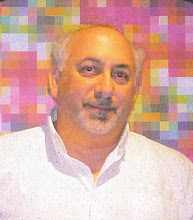
Separated at Birth?: Dave Barton & Mark Ravenhill


British playwright Mark Ravenhill, right; Orange County producer/director Dave Barton, left.

And some of us wondered why Dave has been partial to producing Mark's plays all these years!
Announced today: Dave's new Monkey Wrench Collective will debut January 15, 2010 with Mark Ravenhill's "pool (no water)" and Thomas Middleton's "The Revenger's Tragedy" written 400 years earlier.
Wouldn't miss it for the world!

Thursday, July 2, 2009

Roots


Just returned from Europe, where my brother and his family and Alison and I accompanied my 87 year old mother, Iris, to Hungary for a week so that she could trace her roots.

The highlight of the trip for Iris was our visit to the city of Miskolc, about 2 hours northeast of Budapest, where it was believed her mother's mother's family, the Davidowitz's, lived and owned a winery in the old days.

Efforts to connect via email with the head of the local Jewish community turned out to be a comedy of errors, so we drove to the city center and found ourselves to be only 2 blocks from the old Orthodox synagogue. Stopping in there, the caretaker called a congregation member to open it and show us around.

His name was Peter, and he looks to be about 30 years old, and had his wife and child with him. He offered us a little history on the building (designed by the same architect as the celebrated synagogue in Budapest that we had visited) and the local Jewish community (nearly all were killed in the Holocaust, as the Nazis were pretty thorough in the eastern Hungarian countryside, compared to Budapest, where many more Jews managed to survive the war).

When I told him that my mother's family name was Davidowitz and the story had been that they had a winery, we were astounded to learn that there had once been two main winemaking families in Miskolc: Davidowitz and Lefkowitz. Though he was not aware of any descendents today, Peter took us to the synagogue office, a repository of old books recording births, deaths and marriages, and located a marriage registry from the mid- to late-1800s, in which there were Davidowitz family members recorded.

We thanked him and gave him a donation to the synagogue, and Peter gave us a bottle of his own wine as well as a taste of his "pahlinka," a grappa-type of Hungarian brandy--tasty & with a bite.

Later that day, we made our way to Mad and Tokaj, about 30 minutes away, in the heart of the wine-making region famous for sweet wines. In each, there was a synagogue, testifying to the times when it was said that the Jewish population of Hungary was as much as 40% of the total citizenry.

In the lovely town of Tokaj, we went to a winery--really ancient cave-like vaults now used primarily as a tasting room since most of the wineries are adjacent to the vineyards today. There we tasted several Tokaj wines, never before imagining such variety and depth of character in sweet wines.

We returned to Mad, staying overnight at a small hotel that was reportedly converted from a former bank building. This tiny hamlet gave us some sense of what life might have been for the Davidowitz family more than 150 years ago.

Monday, June 1, 2009

Jon Marans' "The Temperamentals" Opening in NYC


My buddy Jon Marans' latest play, "The Temperamentals," is opening in New York, with Michale Urie (of "Ugly Betty" fame) and Thomas Jay Ryan starring.


I directed Marans' "Old Wicked Songs," the world premiere of his "Jumping for Joy," at Laguna Playhouse, where I also hosted him for a summer in residence while he worked on "Strange and Separate People," which we also gave a reading of.


Break a leg, Jon!

Saturday, March 7, 2009

"Collateral Damage" (my AMERICAN THEATRE article)

The full text of my AMERICAN THEATRE magazine article submitted for the March 2009 issue (the published version was edited down by about half due to space limitations and renamed "The Way Israel Lives Now"):

Collateral Damage

Hillel Mittelpunkt’s 2003 hit-and-run play, The Accident, at Theatre J in Washington, DC, Feb. 4-Mar. 8, reflects the same kind of interest in the moral dilemmas of contemporary Israeli life as his more recent work Goodbye, Africa! The latter focused on an ill-fated return to Uganda by Israeli diplomats years after their ill-fated pas-de-deux with Idi Amin.

The Accident is about that brand of intelligencia that self-consciously violates the high moral ground it claims. Drunk driver Lior and the car’s owner Adam are goaded into fleeing the scene of an unobserved fatal crash by Lior’s wife Tami—they’re too important to be derailed by this unfortunate event, and the victim was, after all, only a Chinese, probably an undocumented worker.

While a sordid melodrama plays out over Tami sleeping with Adam at a conference and Lior sleeping with Adam’s daughter Shiri on a business trip, Lior is pitching some eurocracy on a brand he represents: “I buy Bumper, which means that I support a new world order, a human society devoid of national conflict. I buy Bumper jeans, shoes, sun-glasses, go to their restaurants, listen to their music channel; in short, I buy the Logo, because I support a global village in which Israeli and Palestinian children will dance together wearing Bumper shoes at a Bono concert rocking for a better world and a Beautiful Day.”

He knows he’s failed, though: “with the latest from Gaza, our competitor’s proposals sound much saner than ours” and he cites projects uniting Catholics & Protestants in Northern Ireland, Serbs & Croats in the Balkans, whites & blacks in South Africa.

Meanwhile, Adam, a documentary filmmaker, busily pitches his own project: “Four regular soldiers are mistreating an old Arab peasant at a roadblock. They make him bray like a donkey; they make him spread out his merchandise and then shit on it; they make him execute military drills in the sun. He faints, they pour water on him and force him to go through this routine one more time. The next day he dies. The family claims that he died from humiliation and a broken heart. The army claims that humiliation and a broken heart are not acceptable pathological findings. An investigation is held. One of the soldiers confesses and describes in detail what happened that day at the roadblock. The soldiers are found guilty to varying degrees. The soldier who confesses returns to his military unit, is humiliated, abused and then ostracized. A week later he shoots himself in the head.”

Adam’s project moves forward—but it is the military that finances it.

The sole whiff of redemption wafts our way when we learn that Shiri is in China doing humanitarian work with the family of the hit and run victim (who know nothing about her connection)—a hopeful thought, perhaps, that the next generation will be less prone to moral equivocation.

About its U.S. production, Mittelpunkt says, “This play isn’t about us Israelis (though it was when it was shown here). This play is about you--in a situation where your moral standards conflict with your ambition to live your life the way you wanted to. Will you create in your mind an alternate moral system, one which will rid you of the need to face these questions?”